

Introduction
Sports have always been about excitement, uncertainty, and emotional connection. Fans celebrate victories, debate strategies, and build deep loyalty toward teams and players. In recent years, however, technology has changed how people experience that excitement. With smartphones and internet access becoming common, watching a match is no longer just about entertainment — for many, it now involves prediction and financial risk.
Online match betting emerged from this digital transformation. What once required visiting a bookmaker or relying on informal local networks can now happen instantly through apps and websites. A person can follow a game in real time and place a wager within seconds, reacting to every run, goal, or point. This immediacy has turned sports viewing into a more interactive experience, where spectators feel directly involved in the outcome.
The growth of online betting has also sparked strong debate. Some consider it a harmless form of recreation linked to sports knowledge and analysis, while others warn about addiction, financial loss, and its impact on society. Because of this, online match betting sits in a complex space between entertainment, psychology, and regulation.
Understanding this topic requires looking beyond wins and losses. It involves examining human behavior, technology’s influence, and how modern culture reshapes traditional pastimes.
How People Get Involved in Online Match Betting
For many individuals, entry into online match betting does not begin with the intention to gamble seriously. It often starts casually. A person watches sports regularly, discusses predictions with friends, and eventually becomes curious about testing their judgment in a practical way. Digital platforms make this transition extremely easy because the process feels similar to installing any entertainment app.
After creating an account, users are typically introduced to a dashboard showing upcoming matches, available prediction options, and changing odds. At this stage, the activity feels more analytical than risky. People compare team performance, player statistics, and past results, believing that informed decisions will improve their chances. This early stage is important because it builds confidence and familiarity with the system.
Another factor that increases participation is the small starting stake. When the required amount is low, individuals perceive the activity as harmless experimentation rather than financial exposure. Over time, however, repeated participation can gradually increase involvement. The shift is usually slow and almost unnoticed, moving from occasional predictions to routine engagement during every major match.
Social influence also plays a strong role. Friends discussing outcomes, online communities sharing predictions, and live commentary all contribute to a sense of shared activity. Instead of being a solitary action, betting becomes part of the overall match-watching experience. This social reinforcement reduces hesitation and makes participation feel normal.
In many cases, people justify their involvement by comparing it to other paid entertainment activities. They see it as paying for excitement rather than risking money. The emotional engagement — following every ball, minute, or point — becomes more intense than simply watching as a spectator.
However, the line between entertainment and dependency can blur when emotional decisions replace rational thinking. After experiencing wins, individuals may increase their confidence and participation frequency. After losses, they may attempt immediate recovery. Both reactions are driven more by feelings than calculation.
Understanding how people enter and gradually adapt to online match betting helps explain why it spreads rapidly. The process is rarely sudden; it is a gradual behavioral shift supported by convenience, social interaction, and the human desire to predict uncertain outcomes.
Patterns of Behavior in Online Match Betting
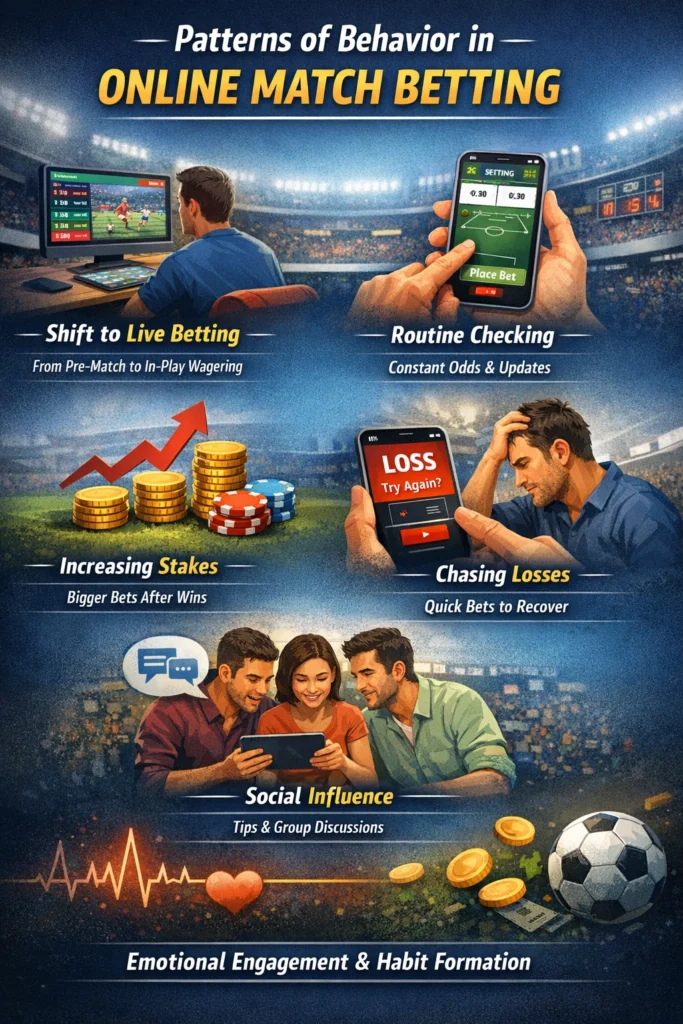
As users spend more time on online match betting platforms, their behavior slowly changes. At first, a person may place a single online match betting prediction before the game starts. Later, they begin checking live odds repeatedly during the match. This shift from pre-match betting to live online match betting is one of the most noticeable patterns in digital sports wagering.
Live online match betting creates a fast decision environment. Every run, goal, wicket, or point immediately changes the online match betting odds. Because the numbers keep moving, users feel they must act quickly. The constant updates make online match betting feel interactive rather than passive. Instead of watching a match calmly, the viewer tracks the online match betting market alongside the scoreboard.
Many participants start forming routines around online match betting. Before the match begins, they analyze teams, compare statistics, and check predictions. During the match, they monitor online match betting odds after every major moment. After the match, they review results to understand whether their online match betting choice was correct. This repetitive cycle strengthens involvement.
Another common behavior is increasing stake size after success. A user who wins several online match betting rounds may believe they understand the pattern of the game. Confidence grows, and the next online match betting attempt becomes larger. On the other hand, losses also influence behavior. Some users try recovery betting, placing another online match betting prediction immediately to regain previous losses.
Mobile notifications also affect habits. Platforms send alerts about upcoming matches, changing online match betting odds, or special markets. Each alert pulls attention back to the online match betting environment. Over time, checking odds becomes automatic, similar to checking social media updates.
Community discussion plays a role as well. Online groups share tips and predictions related to online match betting outcomes. Participants compare opinions and sometimes follow others instead of their own judgment. This creates a collective decision environment where online match betting feels like a shared activity rather than an individual risk.
Emotional response becomes stronger with involvement. A person watching a neutral match may suddenly feel deeply invested because of an online match betting prediction. A single ball or goal can change both the match and the online match betting result. The excitement created by uncertainty keeps users engaged for long periods.
Understanding these behavior patterns shows why online match betting grows quickly. The combination of live updates, repeated engagement, emotional involvement, and social interaction keeps participants connected to the activity far beyond simple sports viewing.
Risks and Consequences of Online Match Betting
As participation in online match betting becomes frequent, the risks connected to it also become more visible. The activity may begin as entertainment, but repeated exposure to online match betting decisions can gradually affect financial habits, emotional stability, and daily routines.
One of the most common risks in online match betting is uncontrolled spending. Because wagers are usually placed in small amounts, users often underestimate the total money involved. Multiple small online match betting entries during a single match can accumulate into a significant loss without immediate realization. The digital format removes the physical feeling of cash leaving the hand, making the expense feel less real.
Another important concern is emotional dependence. Online match betting links mood directly with match outcomes. A win produces excitement and confidence, while a loss produces frustration. When this pattern repeats, users may start chasing emotional relief rather than making rational decisions. They place another online match betting prediction not because of analysis, but to escape the disappointment of the previous result.
Time consumption is also a factor. Live online match betting encourages constant attention to the screen. Instead of watching a match casually, participants monitor odds, statistics, and changing predictions continuously. This habit can interfere with work, studies, or social interaction. The match no longer fits into free time — free time begins to revolve around online match betting.
Financial recovery attempts create another cycle. After losses, individuals often believe the next online match betting decision will correct everything. This thinking increases stake size and reduces patience. The goal shifts from enjoying the game to recovering money quickly, which usually increases overall loss.
There is also psychological pressure. Even when not actively betting, a person may think about upcoming matches, past online match betting outcomes, and possible strategies. This constant mental engagement keeps attention tied to uncertainty and expectation, affecting concentration in other areas of life.
Social consequences may follow. People sometimes hide their online match betting activity from friends or family to avoid judgment. Secrecy increases stress and isolation, especially if losses grow. The activity that once felt like entertainment begins creating tension instead of excitement.
Understanding these consequences does not mean every participant will face them, but awareness is important. Online match betting combines money, emotion, and unpredictability — three powerful influences on human behavior. When they interact repeatedly, the impact can extend beyond the screen into everyday life.
Awareness and Responsible Thinking
As discussions around digital wagering grow, more attention is being given to awareness rather than only restriction. Many people participate occasionally without serious problems, while others struggle because they misunderstand how unpredictable outcomes really are. The difference often lies in expectations.
Sporting events naturally contain uncertainty. Preparation, statistics, and past performance can provide insight, but they never remove chance. Weather conditions, pressure, injuries, or a single mistake can change everything. When viewers accept that unpredictability is permanent, their decisions become calmer and less emotional.
Another helpful approach is setting clear personal boundaries before participation begins. Deciding a fixed amount of time or money in advance prevents impulsive reactions during tense moments. Without limits, excitement can easily override judgment. With limits, the activity remains closer to entertainment.
Taking breaks also matters. Continuous engagement reduces perspective, making each moment feel urgent and important. Stepping away restores balance and helps people remember that the match is only one small part of daily life.
Open conversation can reduce problems as well. Talking honestly with friends or family removes secrecy and lowers stress. When the activity is hidden, pressure grows. When it is discussed openly, it becomes easier to keep control and notice warning signs early.
Ultimately, awareness is not about removing enjoyment but about maintaining balance. Technology has made participation simple and fast, so thoughtful habits must be equally strong. With realistic expectations and self-control, people can decide for themselves how much involvement fits comfortably into their lives.
The Future Outlook
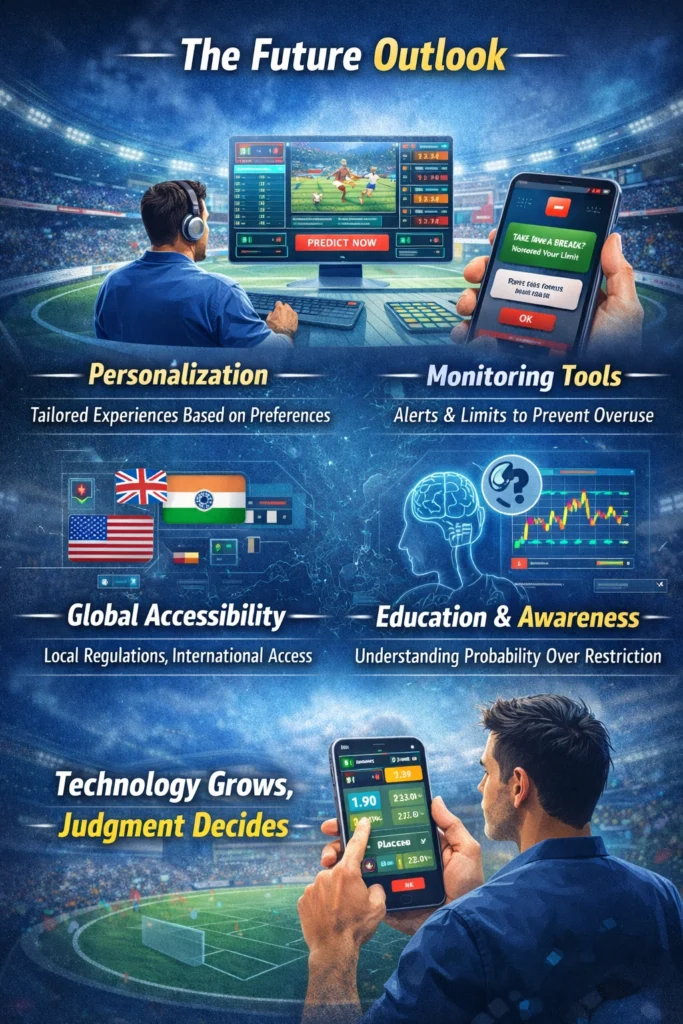
As digital technology continues to evolve, the environment surrounding sports prediction activities will likely keep changing as well. Faster internet speeds, real-time data tracking, and more interactive viewing experiences are already shaping how audiences engage with matches. The boundary between watching and participating is becoming thinner, and future platforms may feel more like interactive broadcasts than separate services.
One noticeable direction is personalization. Systems increasingly adapt to individual preferences — favorite teams, preferred sports, and typical viewing times. This creates a tailored experience where information appears automatically rather than being searched for. While convenient, it also means people may spend longer periods engaged without realizing how much attention they are giving.
Another expected development is stronger monitoring tools. Many platforms and regulators are exploring ways to detect harmful patterns early. Automated alerts, cooling-off periods, and voluntary limits could become standard features. The goal is not only regulation but prevention, helping users remain aware of their own habits.
Cultural attitudes will also influence the future. Some societies may accept these activities as normal entertainment, while others may continue strict control based on social values. Because the internet crosses borders, policies will need to adapt carefully to local expectations while dealing with global accessibility.
Education will likely play a larger role than restriction alone. As people better understand probability and risk, they can make calmer choices. Public discussion, research, and transparent information can help individuals see the activity realistically rather than emotionally.
In the long term, the focus may shift from whether such platforms exist to how responsibly they operate and how consciously people use them. Technology will keep advancing, but human judgment will remain the deciding factor in whether participation stays balanced or becomes harmful.
Final Thoughts
Digital participation in sports predictions reflects a broader change in how people interact with entertainment. Audiences no longer remain only spectators; they look for involvement, influence, and personal connection with what they watch. Technology provides that involvement instantly, turning a simple match into a more intense experience.
The important point is perspective. When treated as occasional recreation, the activity stays within healthy limits. When treated as a way to control outcomes or recover losses, it can create pressure and disappointment. The difference depends less on the platform and more on personal expectations.
Balance comes from understanding uncertainty. No level of knowledge removes chance from sports. Accepting this keeps reactions steady, whether the result is favorable or not. Without that understanding, emotions begin to guide decisions instead of logic.
In the end, the conversation is not only about rules or technology but about awareness. Modern tools will continue to evolve, offering faster and more immersive experiences. Individuals, however, still decide how much time, attention, and importance they give to them.
Keeping entertainment in its place — as a small part of life rather than its center — allows enjoyment without unnecessary stress. With thoughtful habits and realistic thinking, people can watch, discuss, and engage with sports while maintaining control over their choices.
Frequently Asked Questions (FAQ)
1. What is online match betting?
It is a digital activity where a person predicts the outcome of a sports event and places money on that prediction through a website or mobile platform. The result depends on how the real match unfolds.
2. Is it the same as fantasy sports?
Not exactly. Fantasy sports usually involve creating a virtual team and earning points based on player performance over time. Match betting focuses on predicting specific outcomes such as winner, score range, or in-game events.
3. Why do people find it exciting?
Because it increases emotional involvement in the match. Every moment feels important when the outcome affects a personal prediction, making the viewing experience more intense.
4. Can knowledge of sports guarantee success?
No. Knowledge may improve understanding, but sports always contain unpredictability. Injuries, pressure, and unexpected performance changes mean outcomes can never be fully controlled.
5. What is live or in-play betting?
It refers to placing predictions while the match is already happening. The odds change continuously based on the current situation in the game.
6. Why do people sometimes spend more than planned?
Small repeated entries feel insignificant individually. Over time they add up, especially when someone tries to recover a previous loss or reacts emotionally during a match.
7. Is it possible to treat it as entertainment only?
Yes, if clear limits on time and money are set beforehand and respected. Viewing it as recreation rather than income helps maintain control.
8. What are warning signs of unhealthy involvement?
Constantly thinking about upcoming matches, hiding activity from others, increasing amounts after losses, or feeling stress when unable to participate.
9. Does regulation differ by country?
Yes. Some regions allow and monitor it under rules, while others restrict or prohibit it depending on legal and cultural considerations.
10. How can someone stay responsible?
Set spending limits, avoid emotional decisions, take regular breaks, and keep the activity secondary to daily responsibilities and relationships.
Conclusion
In the end, digital sports participation continues to grow as technology becomes more integrated into daily entertainment. For many users, platforms become part of their routine viewing experience, offering interaction alongside live matches. What matters most is awareness and balance — keeping engagement controlled and informed.
For users looking for related platforms and partner networks, you can explore our partners here:
Partner Platforms: mylaser247 , playwin4
Official Website: play99exch
Choosing reliable sources and staying mindful of personal limits helps maintain a safer and more comfortable experience.